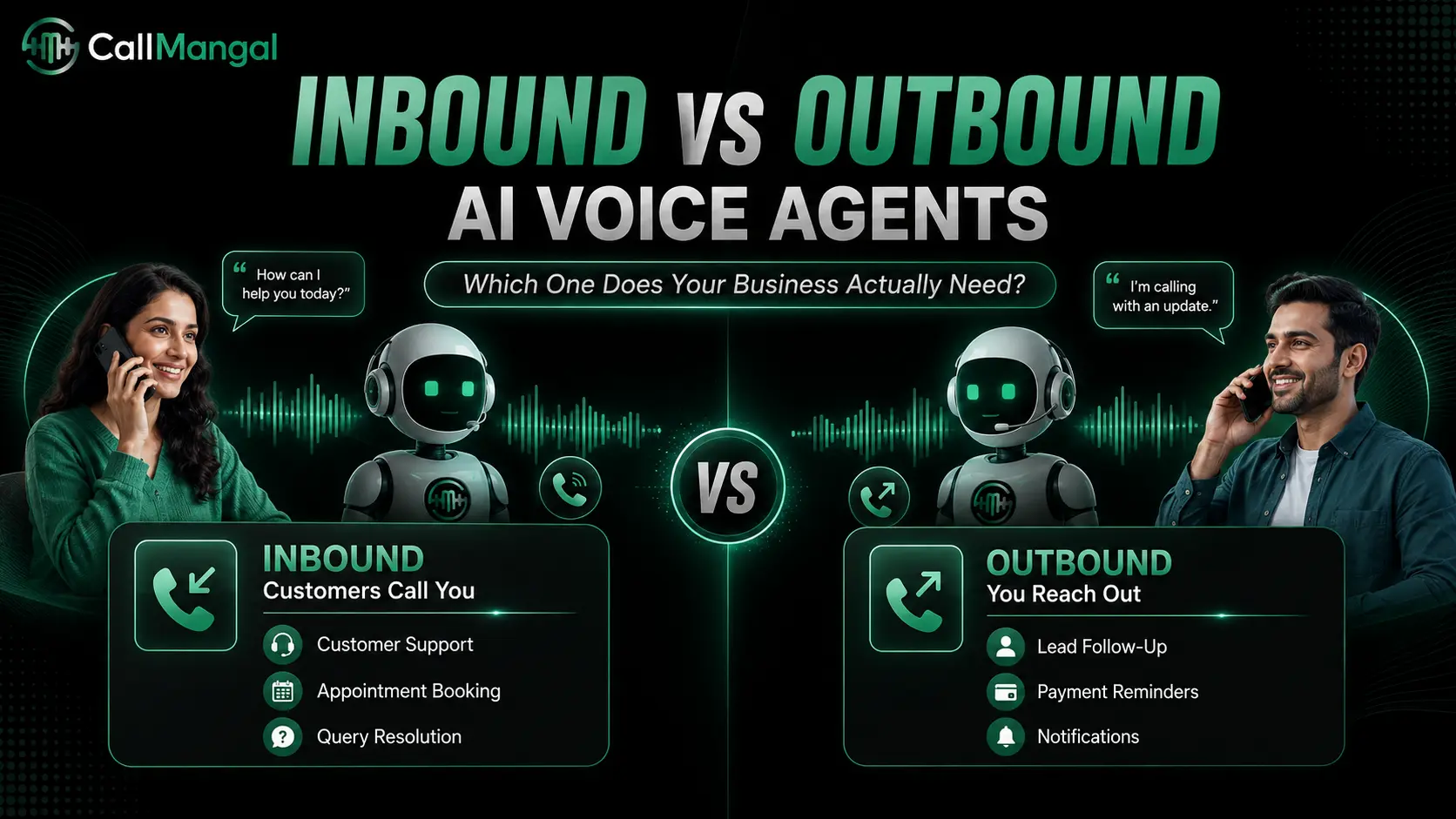
Choosing an AI voice platform gets confusing once you move beyond the demo.
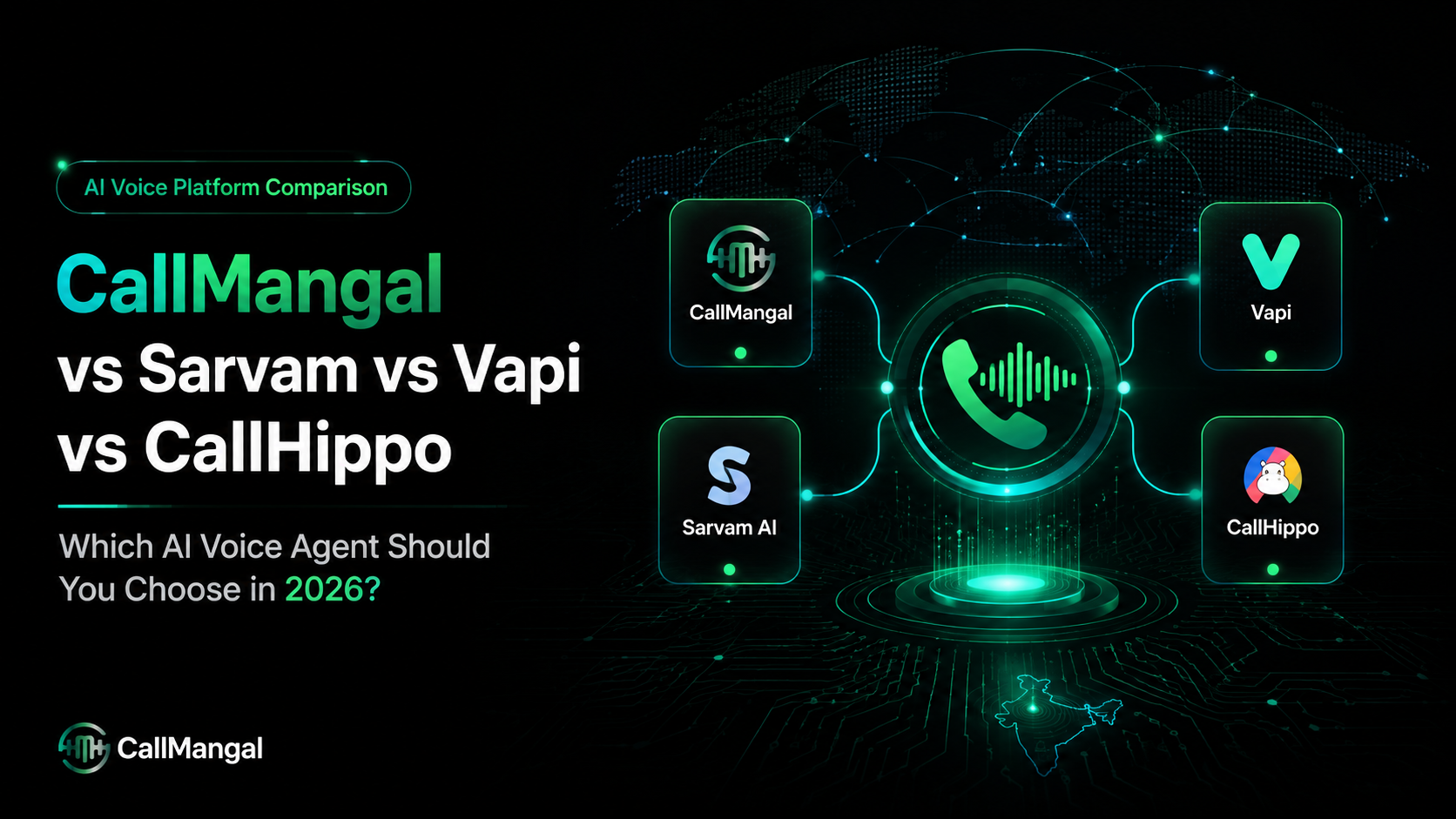
CallMangal, Sarvam AI, Vapi, and CallHippo can all be used to automate voice conversations, but they approach the problem differently.
CallMangal is centered on business calling workflows. Sarvam combines an India-first AI stack with its Samvaad conversational platform. Vapi gives product and engineering teams more control over the underlying voice architecture. CallHippo brings AI voice capabilities into a broader business communications ecosystem.
That difference matters because the wrong category of platform can create more problems than choosing the wrong feature.
This comparison is published by CallMangal. We have used publicly available product, documentation, and pricing information to represent the other platforms as fairly as possible. Features and commercial terms change frequently, so confirm important requirements directly with each provider before making a purchase.
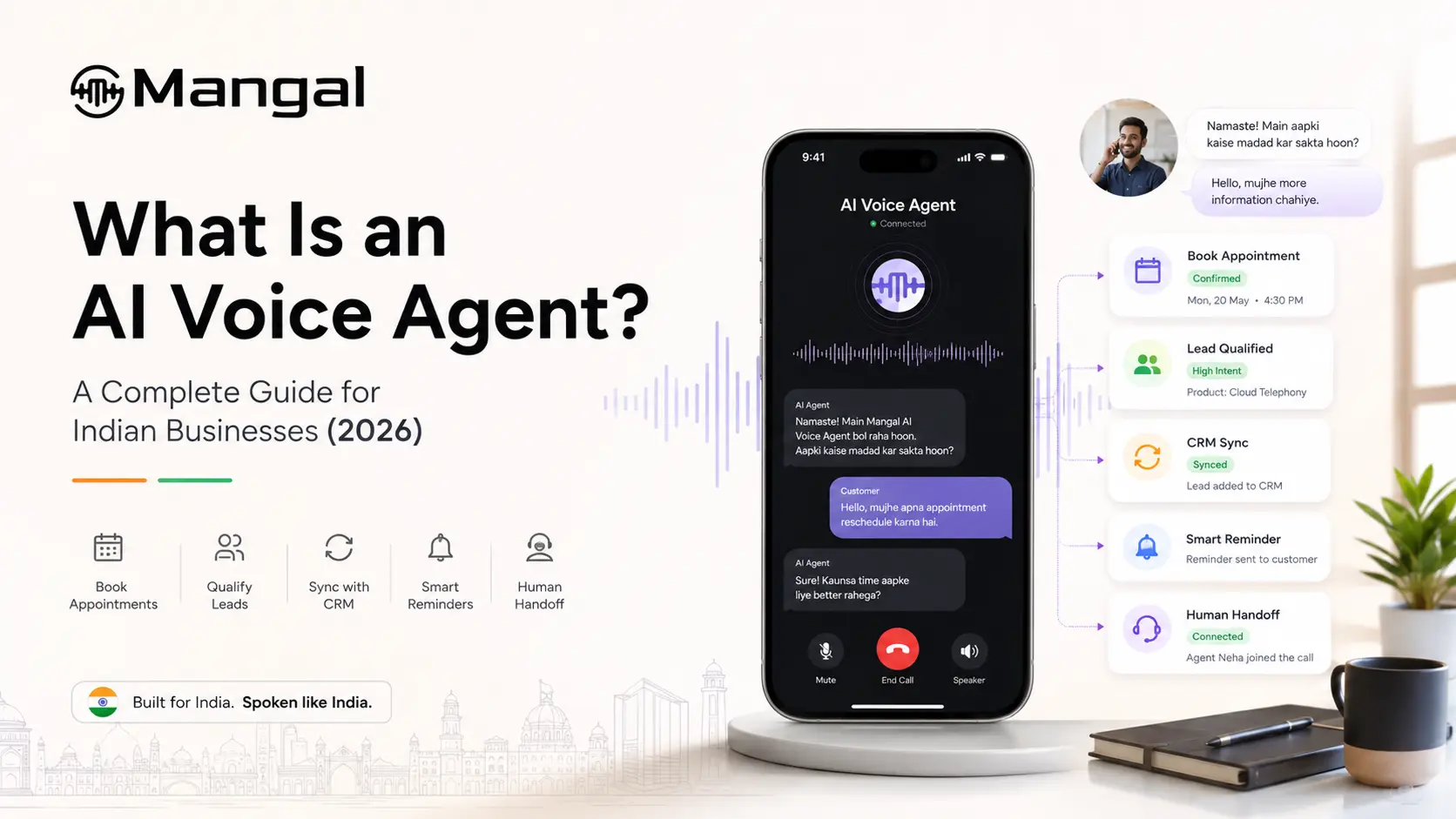
If you are still learning the category, start with What Is an AI Voice Agent?
| If your priority is... | Start by evaluating |
|---|---|
| Running multilingual business calls without assembling the underlying voice stack | CallMangal |
| India-first enterprise conversational AI, private deployment or deeper AI infrastructure | Sarvam AI / Samvaad |
| Maximum control over models, providers and voice-agent architecture | Vapi |
| AI calling inside a broader business phone and communications platform | CallHippo |
You may end up shortlisting two platforms. The point is to compare products that solve the version of the problem your team actually has.
CallMangal vs Sarvam vs Vapi vs CallHippo at a glance
| Area | CallMangal Ours | Sarvam AI / Samvaad | Vapi | CallHippo |
|---|---|---|---|---|
| Product orientation | Business AI calling platform | India-first AI stack + enterprise conversational platform | Programmable voice AI platform | Business communications platform + AI agents |
| Typical buyer | Business, operations, support and sales teams | Enterprise and India-focused programs | Product and engineering teams | Sales, service and phone-system teams |
| Setup approach | Workflow-focused configuration | Enterprise configuration and APIs | Dashboard, APIs, SDKs and developer tooling | Product/dashboard based |
| Inbound calling | Yes | Yes | Yes | Yes |
| Outbound calling | Yes | Yes | Yes | Available across its AI products |
| Indian-language orientation | Core product focus | Core product focus | Depends on the models/providers you configure | Multilingual support |
| International use | India-first with expanding international support | Primarily India-focused | Broad provider flexibility | Global communications focus |
| Developer customization | Business configuration, APIs and integrations | APIs + enterprise deployment options | Deep provider/API/SDK control | Primarily product/dashboard configuration |
| CRM and business actions | Yes | Yes | Configurable through tools | Yes |
| Human handoff | Yes | Supported | Configurable | Yes |
| Recordings/analytics | Yes | Yes | Platform and configurable tooling | Yes |
| Pricing structure | Packaged plans + custom enterprise | API consumption + enterprise commercial model | Platform usage + provider costs | Subscription and product-specific models |
| Main consideration | Less low-level component control | Enterprise scope can be substantial | More technical ownership | Broader communications suite, not only voice AI |
Public product information supports the broad differences above: CallMangal currently exposes inbound, outbound, and WebRTC workflows with recordings, integrations, and handoff; Samvaad spans voice, WhatsApp, and web with enterprise integrations and multiple deployment options; Vapi supports dashboard-created Assistants plus APIs/SDKs; and CallHippo offers an AI Voice Agent alongside a wider communications product family.
Where CallMangal fits
CallMangal makes the most sense when you already know what business call you want to automate.
That might be:
- answering customer enquiries
- qualifying leads
- booking appointments
- confirming orders
- running payment reminders
- following up with customers
The platform is designed around the workflow rather than asking the business to assemble speech recognition, an LLM, text-to-speech, telephony, call history, and human transfer separately.
CallMangal currently supports inbound, outbound, and browser-based WebRTC calling. Its operating layer includes recordings, transcripts, CRM and WhatsApp actions, calendars, APIs, and live human handoff.
Its current language direction is India-first, with support for 30 Indian languages and 12 international languages, with additional languages being added.
That makes it a practical fit for a team whose requirement sounds like:
"We have a calling workflow we want AI to handle. We don't want to build the voice infrastructure ourselves."
Teams that want to choose and tune every individual STT, LLM, TTS, and telephony component may prefer something more developer-oriented.
Where Sarvam AI fits
Sarvam should no longer be treated as only a speech API provider.
Its Samvaad product is a full conversational AI platform covering voice calls, WhatsApp, and web interactions. Sarvam says Samvaad connects with enterprise systems, supports workflow actions and analytics, and can run through Sarvam Cloud, a private VPC, or on-premises infrastructure.
Samvaad currently advertises support across 10 Indian languages plus English, including mixed-language handling and interruptions. Sarvam also continues to offer separate speech, language, and model APIs for teams that want to build closer to the infrastructure layer.
That broader stack changes the comparison.
A large organization may evaluate Sarvam not simply for a customer-support bot, but because language infrastructure, deployment control, model access, security requirements, or multiple conversational channels are part of the same project.
Sarvam belongs high on the shortlist when the voice agent is part of a larger India-focused enterprise AI program rather than an isolated calling workflow.
Where Vapi fits
Vapi is the clearest developer-oriented option in this comparison.
It lets teams build voice assistants, connect tools and APIs, make inbound and outbound calls, and combine specialized Assistants through Squads. Developers can work through SDKs and APIs, but Vapi is not code-only: its current quickstart also lets users create and test an Assistant directly from the dashboard.
Vapi is also experimenting with Composer, which lets users describe an agent in natural language and have Vapi configure it. Composer is currently marked as Alpha /pre-release, so it should not be treated as a mature replacement for the rest of Vapi's configuration tooling yet.
One current product change is worth noting: Vapi says its older visual Workflows feature will retire on August 18, 2026, and directs users to use Assistants or Squads instead.
The attraction of Vapi is control. If your team wants to make deliberate decisions about providers, models, call logic, and architecture, that flexibility can be valuable.
It also means somebody has to own those decisions.
Vapi makes the most sense when the team genuinely wants a programmable platform and has the technical capacity to use it.
Where CallHippo fits
CallHippo comes from a different direction.
It operates a wider communications stack that includes business phone products, call-center functionality, and several AI products. Its standard AI Voice Agent handles natural-speech calls, routing, live human transfer, transcripts, CRM/tool integrations, appointment booking, and lead qualification.
CallHippo also sells a separate Outcome-Based AI Voice Agent for inbound sales leads. In that offering, CallHippo builds and manages the agent, calls new leads, and charges based on successful demo bookings rather than per-call usage.
This distinction matters because someone comparing CallHippo with CallMangal or Vapi needs to first decide which CallHippo product they are actually evaluating.
If your organization already uses CallHippo for phone operations, keeping AI inside the same ecosystem can be a meaningful advantage.
If you are starting from scratch, compare the AI workflow itself rather than choosing the surrounding phone system by default.
How their pricing models differ
There is no clean apples-to-apples "price per minute" comparison here.
The products package different parts of the voice stack, so headline prices can hide more than they reveal.
CallMangal
CallMangal's latest pricing structure uses packaged plans based on calling minutes, number of agents, and workflow requirements, with custom Enterprise options for larger deployments.
For current rates and inclusions, use the CallMangal Pricing page rather than relying on an old price quoted in a comparison article.
Sarvam AI
Sarvam separates its infrastructure pricing from its enterprise conversational product.
Its APIs are consumption-based. Current public API rates include ₹30 per hour for standard speech-to-text and separate character/token-based pricing for other speech and language services. Samvaad is the larger conversational platform and should be evaluated under the commercial terms Sarvam provides for that deployment.
Vapi
Vapi's current Build plan lists a $0.05 per call-minute hosting charge, excluding model-provider costs. STT, LLM, and TTS are charged at provider cost unless you bring your own API keys. Transport or telephony also comes from the selected provider. Build includes 10 concurrent call lines, with additional lines listed at $10 per line per month.
So $0.05 is not automatically the final cost of a minute-long conversation.
CallHippo
CallHippo's public pricing currently lists its standard AI Voice Agent at $45 per agent per month, with calling charged separately at $0.25 per minute in the displayed US pricing. The same page also exposes localized INR pricing in some views.
Its outcome-based agent uses a completely different model: there is no per-call charge on that offer; customers pay per completed demo booking.
A better way to compare cost
Instead of asking which homepage shows the lowest number, calculate the cost of one completed workflow.
For example:
qualified lead → CRM updated → meeting booked
or:
customer call → issue resolved → no human restart
Include the platform fee, call usage, telephony, model costs, integrations, support, and the engineering or operational effort needed to keep the system working.
Indian languages: don't compare the number alone
Language count is useful for building a shortlist. It does not tell you how a platform will behave with your customers.
For Indian calls, a realistic evaluation should include:
- Hindi-English or other code-switching
- different accents and speaking styles
- names, amounts, dates, and phone numbers
- industry-specific vocabulary
- interruptions and barge-in
- ordinary mobile-call audio
- successful task completion
Sarvam's Samvaad explicitly emphasizes Indian-language and mixed-language conversations, while CallMangal is being built around broad Indian-language coverage alongside international expansion.
Vapi gives teams the ability to configure providers, so language performance can depend heavily on the STT, model, voice, and settings selected for the deployment. Its architecture is designed to support that kind of provider-level configuration.
If language quality is a major buying criterion, read Multilingual AI Voice Agents in India and run the same tests across every shortlisted product.
Which platform should you shortlist?
| Your priority | Start by evaluating |
|---|---|
| Get a multilingual business calling workflow live without building the underlying stack | CallMangal |
| India-first enterprise conversational AI and flexible deployment | Sarvam AI / Samvaad |
| Deep control over models, providers, and agent architecture | Vapi |
| AI calling within a broader communications ecosystem | CallHippo |
If two descriptions sound like your business, shortlist both.
Then test them on the same workflow rather than deciding from feature pages.
When CallMangal may not be the best fit
There are cases where another platform is the more logical starting point.
If your engineers want to control individual model and speech providers, bring their own keys and build a highly customized voice architecture, Vapi deserves a serious look. Its product is designed for that level of configurability.
If private VPC or on-premises deployment and a broader sovereign India-focused AI stack are central requirements, Sarvam may fit the architecture better. Samvaad publicly offers managed cloud, private VPC, and on-premises options.
If your sales and phone operations are already standardized on CallHippo, and its AI product covers the workflow you need, testing the native option first may create less operational change.
CallMangal is strongest when the problem is more straightforward:
You have real business calls to automate and want the platform to handle the calling workflow without turning the voice stack into a separate engineering project.
How to compare these platforms on a real pilot
Do not let each vendor choose the demo that makes its product look best.
Pick one real workflow and give every shortlisted platform the same job.
If you are evaluating appointment booking, for example, give each agent the same opening hours, booking rules, customer questions, and success condition.
Then test what normally breaks polished demos:
- Start with the expected script, then ask an unplanned question.
- Interrupt the agent while it is speaking.
- Change your answer midway through the conversation.
- Test the languages and accents your customers actually use.
- Make at least one call on an ordinary phone connection with background noise.
- Verify the action after the call — CRM update, booking, payment status, lead record, or whatever the workflow requires.
- Force a failure and see what happens.
That last test is easy to overlook.
If the agent cannot understand the customer, does it ask a useful clarification? Does it guess? Does it transfer? And if it transfers, does the human receive enough context to continue without making the customer start again?
Finally, calculate the total cost per completed outcome.
A cheap call that fails the workflow is not cheaper.
If you have not decided whether your first project should handle incoming or outgoing calls, read Inbound vs Outbound AI Voice Agents before running the pilot.
Frequently asked questions
Is CallMangal an alternative to Vapi?
Yes, if the business goal is to automate voice calls, but the products approach that goal differently.
CallMangal is designed around complete business calling workflows. Vapi is more developer-oriented and gives teams deeper control over models, providers, tools, and architecture. Vapi also provides dashboard setup, so "developer-first" does not mean that every basic agent requires coding.
How is CallMangal different from Sarvam AI?
CallMangal focuses on operating business voice workflows such as support, lead qualification, appointments, reminders, and follow-ups.
Sarvam has a broader India-first AI stack. Samvaad is its end-to-end conversational platform, while Sarvam also offers speech, language, and model APIs and supports cloud, VPC, and on-premises deployment.
Which platform is best for Indian-language voice AI?
There is no reliable answer based only on the number of languages listed on a website.
CallMangal and Sarvam are both strongly India-oriented, but their product models differ. Other platforms can also support Indian-language workflows depending on their models and configuration.
Test the actual languages, code-switching, accents, terminology, and phone conditions your customers use.
Which platform gives developers the most control?
Among these four, Vapi is the clearest choice for teams that want provider-level and API-level control.
Its platform supports dashboard configuration as well as APIs, SDKs, custom tools, Assistants, and multi-assistant Squads.
How should I compare AI voice agent pricing?
Compare the cost of a completed business outcome, not one advertised rate.
Include platform or subscription fees, calling usage, model-provider costs, telephony, concurrency where applicable, integrations, support, and the engineering or operational work required to maintain the deployment.
Test the platform on the call that actually matters
A comparison table can get you to a shortlist.
It cannot tell you whether an agent will work with your customers.
Take one real inbound or outbound workflow and test it end to end.
Use your terminology.
Interrupt the agent.
Switch languages if your customers do.
Give it an unexpected answer.
Make sure the business action actually happens.
And test what the system does when the conversation goes wrong.
You can use the same process to try a Live Call with CallMangal, or book a Demo and bring the workflow you want to automate.
.webp)